

Why Colour Matters Less Than You Think
Choosing the best soft plastic colours for bass can feel like guesswork. Every packet in your tackle box looks like a good idea at the shop. Then you reach the water and cannot decide. This guide gives you a simple way to choose, based on how clear the water is.
First, remember that bass hunt with more than their eyes. They also feel vibration and movement in the water. Therefore, a bait with good action will often beat a bait in the “perfect” colour. For more on how bass sense and react, read our guide to understanding bass behaviour.
However, colour still helps in two ways. It changes how easily a bass can see your bait. It also changes how natural the bait looks. As a result, think of colour as a tie-breaker. Choose the size and action first, and then choose the colour.
Best Soft Plastic Colours for Bass in Clear Water
In clear water, bass get a close look at your bait. Therefore, natural colours usually work best. Think about what bass eat: small fish, crayfish and insects. Your bait should look like one of them.
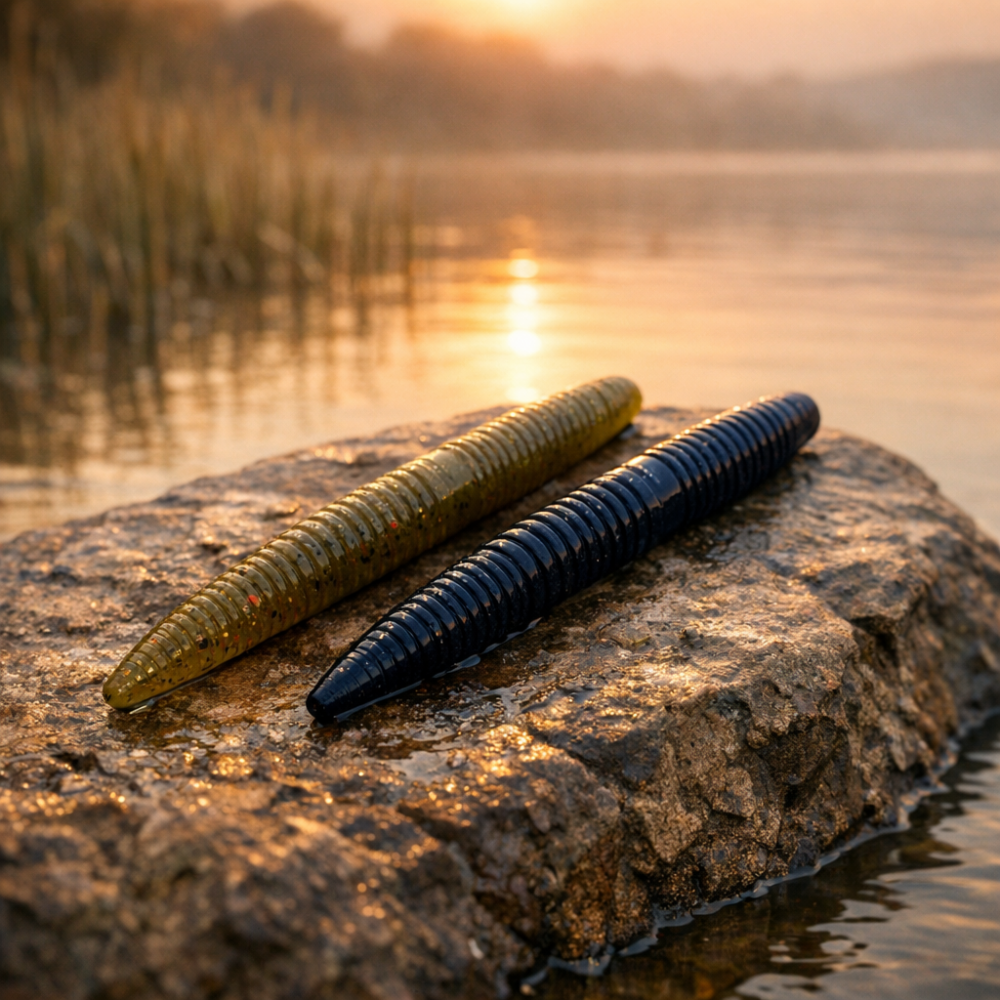
Start with greens and browns. Watermelon Seed and Green Pumpkin Seed are two reliable choices. They look like crayfish and plant life, and they blend into the bottom. Baby Bass is a good pick when small bass or other baitfish are around. White and silver works well when you want to copy a shiny baitfish.
In addition, keep your presentation quiet in clear water. Use a lighter line and a slow, natural retrieve. Bass can inspect the bait closely, so avoid anything that looks out of place.
What to Use in Stained or Muddy Water
Stained water changes the game. Bass cannot see far, so they rely on silhouette and vibration. As a result, you want a bait that stands out from the murky background.
Dark colours give the strongest outline. Black and Blue, plain Black and Junebug are the classic choices. A dark bait looks like a solid shape against the lighter water above it. A dark bait also stays easy to see when the light is poor.
Some days, a bright colour works better. For example, Bubblegum or White and Silver can show up well in cloudy water. If a dark colour does not get bites, try a bright one. Then switch back if you need to. Change one thing at a time, so you know what made the difference.
Light, Cloud and Time of Day
Water clarity is only half the story. Light matters too. In bright sun, natural and translucent colours often look best. On an overcast day, or at dawn and dusk, darker colours show up better. The light is low, so a strong silhouette helps the bass find your bait.
Moreover, water colour can change during one trip. Wind, rain and run-off can stain a clear dam in a few hours. Check the water again if conditions change. To read the water first, see our guide on how to read water and find bass on African dams.
A Simple Starter Selection
You do not need every colour in your bag. Four colours cover most days. Take two natural colours for clear water and two dark colours for stained water.
For example, the Shack Action Worm comes in 14 colours, including all four of these choices. Pick Watermelon Seed and Green Pumpkin Seed for clear water. Then add Black and Blue and Junebug for stained water. A packet holds 8 baits and costs R65. It works on finesse rigs and as a jig trailer.
If you are new to rigging soft plastics, start with our step-by-step rigging guide. At Custom Bait Shack, we pour our baits by hand in South Africa. You can also ask us about custom colours.
Common Colour Mistakes to Avoid
First, many anglers change colour too often. A new colour every ten casts tells you nothing. Give each colour a fair chance in the right spot before you swap it.
Next, do not ignore the size and the action. A well-coloured bait that sits still in the water will not draw many bites. Match the bait to the depth and the mood of the bass, and then fine-tune the colour.
Finally, do not copy someone else’s choice without checking the water. A colour that works on one dam can fail on another. The water clarity and the food are different. Use other anglers’ tips as a starting point, and then trust what you see.
Keep It Simple and Keep Notes
In short, no colour works every day. Use the water as your guide. Clear water calls for natural colours, and stained water calls for dark or bright ones. Write down the colour, the water clarity and the result after each trip. After a few outings, you will see your own pattern.
For more reading, see this colour guide from Wired2Fish. Tight lines, and let us know which colour worked best for you.